|
Use this link to add your email
address to the RARWRITER Publishing Group mailing list for
updates on activities associated with
the
Creative Culture and Revolution
Culture journals,
and other RARWRITER Publishing Group interests.
ABOUT RAR: For those of
you new to this site, "RAR" is Rick Alan Rice, the publisher
of the RARWRITER Publishing Group websites.
Use this link to visit the
RAR music page, which features original music
compositions and other.
Use this link
to visit Rick Alan Rice's publications page, which
features excerpts from novels and other.
RARADIO
(Click here)
"On to the
Next One" by
Jacqueline Van Bierk
"I See You
Tiger" by Via Tania
"Lost the
Plot" by Amoureux"
Bright Eyes,
Black Soul" by The Lovers
Key
"Cool Thing"
by Sassparilla
"These Halls I Dwell"
by Michael Butler
"St. Francis"by
Tom Russell & Gretchen Peters, performance by Gretchen
Peters and Barry Walsh;
"Who Do You
Love?"by Elizabeth Kay;
"Rebirth"by
Caterpillars;
"Monica's
Frock" by
Signel-Z;
"Natural
Disasters" by
Corey Landis;
"1,000
Leather Tassels" by
The Blank Tapes;
"We Are All Stone" and "Those
Machines" by Outer
Minds;
"Another Dream" by MMOSS;
"Susannah" by Woolen
Kits;
Jim Morrison, Elvis Presley,
Michael Jackson and other dead celebrities / news by A
SECRET PARTY;
"I Miss the Day" by My
Secret Island,
"Carriers of Light" by Brendan
James;
"The Last Time" by Model
Stranger;
"Last Call" by Jay;
"Darkness" by Leonard
Cohen;
"Sweetbread" by Simian
Mobile Disco and
"Keep You" fromActress off
the Chronicle movie soundtrack;
"Goodbye to
Love" from October
Dawn;
Trouble in
Mind 2011 label
sampler;
Black Box
Revelation Live
on Minnesota Public Radio;
Apteka "Striking
Violet";
Mikal
Cronin's "Apathy"
and "Get Along";
Dana
deChaby's progressive
rock
_______
MUSIC LINKS
"Music Hot Spots"
LOS ANGELES
SAN FRANCISCO
NEW YORK CITY
NASHVILLE
CHICAGO
AUSTIN
DENVER-BOULDER
MINNESOTA
SEATTLE
NEW ORLEANS
PHILADELPHIA
BOSTON
PORTLAND
DETROIT
MEMPHIS
PACIFIC NORTHWEST
FLORIDA
ARIZONA
INTERNATIONAL LINKS
UNITED KINGDOM
EUROPE
JAPAN
SCANDANAVIA
AUSTRALIA
CANADA
ASIA
|
|

ATWOOD - "A Toiler's Weird Odyssey of Deliverance" -AVAILABLE
NOW FOR KINDLE (INCLUDING KINDLE COMPUTER APPS) FROM
AMAZON.COM. Use
this link.
CCJ Publisher Rick Alan Rice dissects
the building of America in a trilogy of novels
collectively calledATWOOD. Book One explores
the development of the American West through the
lens of public policy, land planning, municipal
development, and governance as it played out in one
of the new counties of Kansas in the latter half of
the 19th Century. The novel focuses on the religious
and cultural traditions that imbued the American
Midwest with a special character that continues to
have a profound effect on American politics to this
day. Book One creates an understanding about
America's cultural foundations that is further
explored in books two and three that further trace
the historical-cultural-spiritual development of one
isolated county on the Great Plains that stands as
an icon in the development of a certain brand of
American character. That's the serious stuff viewed
from high altitude. The story itself gets down and
dirty with the supernatural, which in ATWOOD
- A Toiler's Weird Odyssey of Deliveranceis the
outfall of misfires in human interactions, from the
monumental to the sublime. The
book features the epic poem "The
Toiler" as
well as artwork by New Mexico artist Richard
Padilla.
Elmore Leonard
Meets Larry McMurtry
Western Crime
Novel
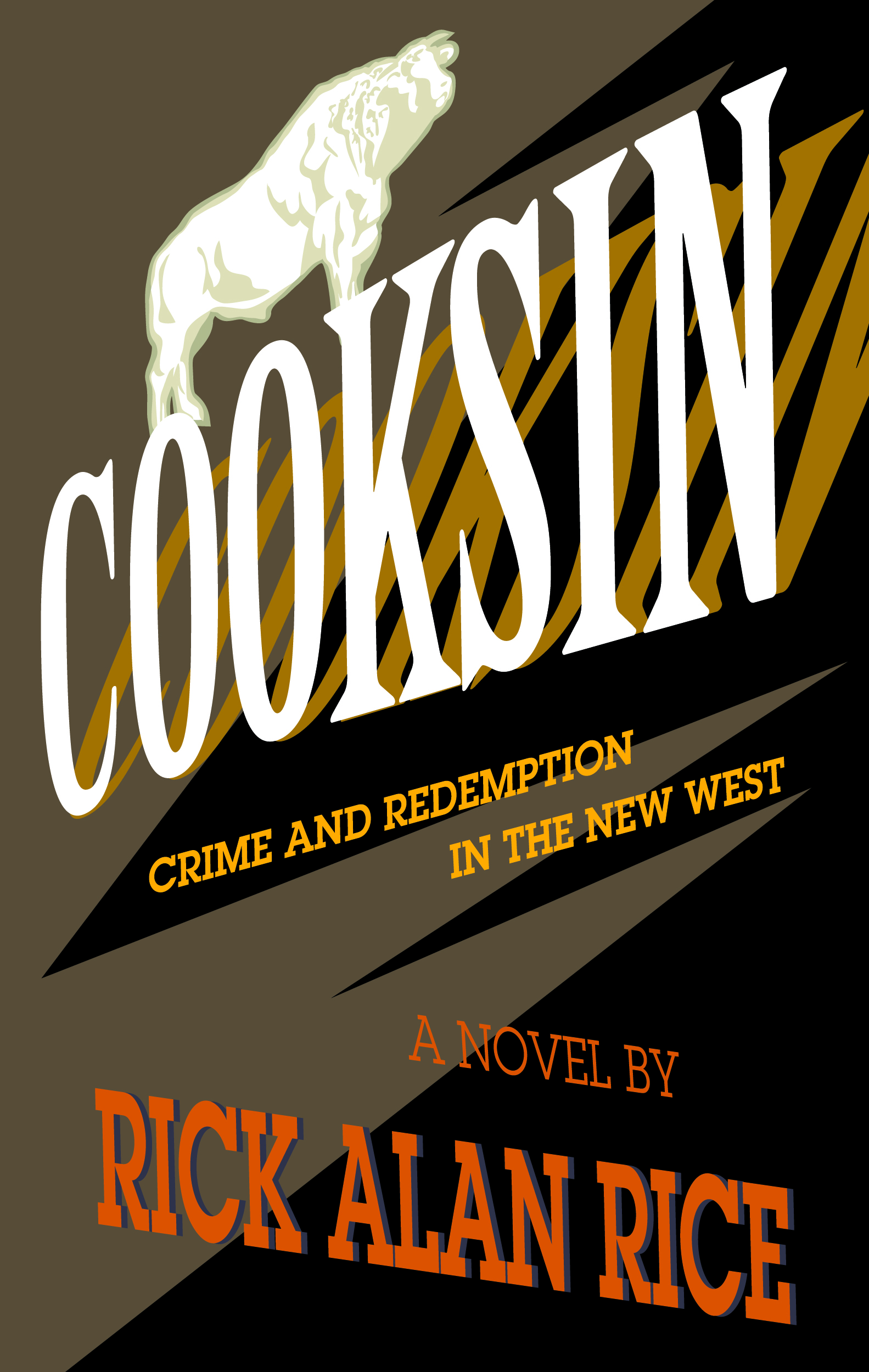
I am offering another
novel through Amazon's Kindle Direct Publishing service.
Cooksin is the story of a criminal syndicate that sets its
sights on a ranching/farming community in Weld County, Colorado,
1950. The perpetrators of the criminal enterprise steal farm
equipment, slaughter cattle, and rob the personal property of
individuals whose assets have been inventoried in advance and
distributed through a vast system of illegal commerce.
It is a ripping good yarn, filled
with suspense and intrigue. This was designed intentionally to
pay homage to the type of creative works being produced in 1950,
when the story is set. Richard Padilla
has done his usually brilliant work in capturing the look and feel of
a certain type of crime fiction being produced in that era. The
whole thing has the feel of those black & white films you see on
Turner Movie Classics, and the writing will remind you a little
of Elmore Leonard, whose earliest works were westerns.
Use this link.
EXPLORE THE KINDLE
BOOK LIBRARY
If you have not explored the books
available from Amazon.com's Kindle Publishing
division you would do yourself a favor to do so. You
will find classic literature there, as well as tons
of privately published books of every kind. A lot of
it is awful, like a lot of traditionally published
books are awful, but some are truly classics. You
can get the entire collection of Shakespeare's works
for two bucks.
You do not need to buy a Kindle to
take advantage of this low-cost library. Use
this link to go to an Amazon.com page from which you
can download for free a Kindle App for
your computer, tablet, or phone.
Amazon is the largest,
but far from the only digital publisher. You can
find similar treasure troves atNOOK
Press (the
Barnes & Noble site), Lulu,
and others. |
|
|
|
Essays
|
The RARWRITER essay pages have been one of the most
vibrant aspects of this site, to the point where we have archived previous
pieces to manage the volume. Below is the current stuff. Read and weep. Comments
are welcome. - RAR
|
 Performing
Rights Organizations: PRO’s - LEGAL WOLVES in the FLOCK of SMALL MUSIC Performing
Rights Organizations: PRO’s - LEGAL WOLVES in the FLOCK of SMALL MUSIC
Alice Hill is a short story
writer, restaurant and venue operator, mother and Kansas farm wife.
Al Petteway and Amy White brought their
magic to our little farming town. They are
good at magic.
In 2005 they graciously traveled from North
Carolina to Atwood, KS to support the 1907
Shirley Opera House Project
(restoration/rehabilitation) with a
fundraising concert. Their music mesmerized
the audience and began a new life for the
old building.
The Shirley Opera House holds that
indefinable energy that flows from musician
to listener and back. Built from locally
kilned bricks in 1907 it was recognized for
its authentic character by the Kansas and
National Registers of Historic Places as it
turned 100 years old. As a member of the
Boulder Acoustic Society exclaimed “there’s
music in the walls”.
Since that first event, many others have
followed. I call it our Monthly Music Fix
and encourage people to view a night at the
Opera as better than drugs.
Anti-depressants, that is. Now, six years
later I am depressed, angry, frustrated and
outraged. .
READ POST - COMMENT
___________________ |

Phillip Rauls Shares News
of the Passing of a Legend to Music Industry Insiders - Poe Kat
Phillip Rauls -
Photographer; Four Decade-long
Atlantic, STAX Records A&R
This is truly the end of an
era.... We are saddened to pass along the news that legendary tipsheet
publisher Bobby
Poe, whose annual
radio and record industry conventions were equally legendary, passed
away Saturday, Jan. 22 of complications from a blood clot. He was 77 and
had been battling throat cancer for the past two years. Poe's son, Bobby
Jr., posted the news on Facebook on Sunday. Poe, a.k.a. "The Poe Kat,"
is best known and loved as the publisher of his iconic Pop Music Survey,
an influential weekly music tipsheet that was sent to Top 40 radio
stations and record labels..
READ POST - COMMENT
|
Click on the links below to go to bookmarked entries on
this page.
___________________
Posted September 16, 2010
___________________
Posted April 26, 2010
___________________
Posted January 13, 2010

___________________
Posted January 10, 2010
___________________
Posted November 5, 2009
___________________
Posted November 4, 2009
___________________
Posted October 22, 2009
___________________
Posted October 7, 2009
Finger Style
For
reasons unplanned, RARWRITER.com's Artist News home page is currently filled
with pieces on solo acoustic guitarists who, by necessity if they choose to be
interesting, use the "Finger Style" of playing. This is a genre of music
that has been a particular focus at RARWRITER.com since Douglas Strobel became a
regular contributor to the site. He is a Finger Style guitarist and is devoted
to documenting and sustaining the tradition of the style, particularly as it
relates to the performance of "Country Blues", as epitomized by "Jelly Roll"
Morton.
The term "Finger Style" guitar is
obviously tortured, as there are no legitimate alternatives to the use of one's
fingers to play guitar or any other instrument that isn't driven by a pedal.
Just for the sake of considering
this subject, the guitar is an instrument that produces sounds by making tightly
drawn steel and/or nylon strings vibrate, and there are several ways to "attack"
the strings to set them in to that motion. One may use a plectrum, a "pick", to
snag and release ("pluck") single strings, or drag across a number of strings to
produce a "strum" sound. One may "tap" strings, striking a string against the
fret board (along the neck of the guitar) to set it in motion at a specific
pitch. These aspects of producing sound on a guitar are largely "dominant" or
"strong" hand things, meaning "right-hand" activities for a right-handed player,
"left-hand" activities for a "lefty".
The "weak" hand - and these
designations of "strong" and "weak" have more to do with orientation than
physical strength - is the one used to form chord shapes and press strings
against the fret board to play specific notes.
In Finger Style guitar, the strings
are "plucked" in two ways. The thumb of the "strong" hand is typically used to
pluck "down" on the lower strings of the instrument, the 6th, 5th and 4th
strings. "Finger Style" players often wear a "thumb pick", a plastic wrap-around
pick that fits onto the thumb and gives some reach into the strings. Other
players choose to let their thumbnail grow long to become a natural pick.
The four fingers of the "strong"
hand also pluck the strings, but typically by drawing upwards in opposition to
the motion of the thumb. In a highly developed "Finger Style" player, each of
the four fingers will be used to pluck strings for producing the sounds of
single notes, duads, triads and whole chords. In some techniques, fingers may be
temporarily assigned to certain strings, and reassigned with the change of a
chord. Or, rapid bursts of 16th notes may be achieved by plucking single strings
in a succession of notes that could only be achieved by using more than one
finger to pluck out the series. That is an advancement only found in top-flight
classicists, usually for playing Spanish or Latin styles of music. The thumb may
also have a role in producing rapid note sequences, but never at the expense of
the rhythmic bass line.
You get a range of attacks from
fully developed "Finger Style" players, including strumming and bashing, but the
one thing that is constant is the bass drone produced by the thumb.
A metronomic sense of time is
required to play "Finger Style" because the technique is developed to allow
guitarists to play arrangements in their entirety, both melody and bass lines,
along with rich grace notes and well-considered accents and runs.
That metronomic timing thing is
extraordinarily powerful, because it undergirds one's commitment to a piece.
Once you start playing a song and establish that beat and feel, you are
committed. Anything less than performing the song through to completion with
its timing intact and its melody fully expressed is failure. "Finger
Style" is a real leap into the fire, an attention-drawing high-wire act that
cannot be said to "work" unless it portrays the composition in a uniquely
powerful way. One must become the vehicle that transports the listener to the
place the composer envisioned without breaking the spell by missing a beat or
blowing a note.
Mastering "Finger Style" technique
is no small feat, which is what makes listening to and watching players like
12-year old South Korean prodigy Sungha Jung so awe inspiring. This style is not
really something every player would or could aspire to, but is rather a
"player's-player style". People who love the guitar, and particularly the
acoustic guitar, may find their musical worlds hugely expanded by pursuing this
line of study. After one has grown bored with playing "rhythm guitar" to classic
rock tunes, or copying the solo sections of classic recordings, or even holding
down one of these roles in a bar band, new fascination in the instrument may be
found in the considerable time it takes to develop into a "Finger Style" player.
"Finger Style", more than any other
guitar style (it encompasses so much and so many musical styles, from Latin to
Country), may seem simultaneously to be so much more and so much less than what
it appears to be. It tends to bring out the richness in simple compositions, the
subtle shadings and tonalities that make up the heart of a piece. It also adds
great depth and complexity to compositions and can often fool the ear. A case in
point is the music of Robert Johnson, which on first listen may sound
extraordinarily primitive, more "rustic charm" than "music", but on subsequent
listens it grows more and more complex and full. Guitarists sitting down to
learn Robert Johnson tunes quickly become confronted with a world beyond
immediate perception, and this is part of why hard-core musicians often fall in
love with the blues, which has this mystery at its foundation and core. It isn't
all just about SRV hammering out "Cold Shot", wonderful as that is.
"Finger Style" is also why so many
musicians become acoustic guitar fanatics as they grow older. At some point,
some may lose interest in the electronic effects that drove the songs of their
youth and opt for rich wooden sounds that land more gently on their aging ears.
That is not as sad as it sounds.
"Finger Style" technique is the
final fulfillment of many a guitar player's ambition, which is to be taken
seriously as a musician.
I remember my father asking me, when
I was kid and first learning the rudiments of playing the guitar, how and when I
would start to work the melody lines of the songs I was learning into the chords
I was strumming. He had seen and heard this and watching me struggle just to
make chords, and not being a guitar player himself, he wondered how it could all
ever come together. At the time, when roles in bands tended to be simplified and
assigned in terms of "Rhythm" and "Lead" guitar, I simply had no idea. It really
never occurred to me to literally play the arrangements in the sheet music that
was available to me, beyond strumming the chords and changing at the appropriate
intervals. I don't know what I thought all those notes on the page were there
for; pianists, I guess. I would just learn the odd solo parts from songs by
"copying" from records, which were more or less useless played out of context,
at least after you had impressed your young friends with your new licks once or
twice. And, mostly, I would bang away at chord changes for the purpose of
accompanying my own pained vocals.
There is a limit to what a kid can
do with that.
"Finger Style" is the "piano
approach" to guitar, the Full Monty of player development. It is the door that
opens and transitions an aspirant from "Player" to "Guitarist", in the process
gifting that musician with a satisfaction that is reborn with each new piece of
music found there to be interpreted.
- RAR
___________________
Posted September 10, 2009
My Most Sincere Apologies, Mr.
Jeter
Back
in June, writing as a disgruntled Yankee fan, I suggested that the Yankees,
supposedly unable to field ground balls to the standard of a major league team,
position themselves more as would a "10-man" girls softball team. I suggested
they "do the Jeter", which just struck me as funny, but obviously implied that
our captain, as great as he has been, had lost a step over the years and was
now, on some level, "laughing stock".
Since writing that - and I am not
suggesting that doing so had anything to do with anything - our man Derek Jeter
has gone on, at age 35, to have something like the greatest year of his career.
OFFENSE:
Check these 2009 stats (after
141 games) vs. his Projected 2009 totals vs. his career averages for a 162 game
season:
| Derek
Jeter |
PA |
AB |
R |
H |
2B |
3B |
HR |
RBI |
SB |
CS |
BB |
SO |
BA |
OBP |
SLG |
OPS |
| 2009 - 141
games |
632 |
564 |
97 |
186 |
26 |
1 |
17 |
62 |
25 |
5 |
60 |
77 |
.330 |
.397 |
.470 |
.867 |
| Projected
2009 |
763 |
649 |
112 |
214 |
30 |
1 |
20 |
71 |
29 |
5 |
69 |
89 |
.330 |
.397 |
.470 |
.867 |
| 162 Game Avg |
743 |
657 |
120 |
208 |
33 |
4 |
17 |
81 |
23 |
6 |
67 |
111 |
.317 |
.387 |
.459 |
.846 |
This season, Derek Jeter is
improving on his career averages in Plate Appearances, Hits, Homeruns, Stolen
Bases, Bases on Balls, Strikeouts, Batting Average, On Base Percentage, Slugging
Percentage, and On Base Plus Slugging Average.
In fact, Derek Jeter is having the
kind of year in 2009 that Carl Yaztremski had in his MVP year of 1967
with the Boston Red Sox; a year that cemented him in the minds of baseball fans
everywhere as one of the all-time greats.
| Carl
Yastrzemski |
PA |
AB |
R |
H |
2B |
3B |
HR |
RBI |
SB |
CS |
BB |
SO |
BA |
OBP |
SLG |
OPS |
| 1967 - 161
games |
680 |
579 |
112 |
189 |
31 |
4 |
44 |
121 |
10 |
8 |
91 |
69 |
.326 |
.418 |
.622 |
1.040 |
Comparing the two is apples to
oranges in that Yaz was a power hitter who rarely struck out and drew the kind
of walk totals that long ball hitters do. Still, Yaz was not playing baseball's
most challenging position, shortstop, as Jeter does.
Jeter has been so consistent on
offense over the course of his career that it is easy to take him for granted.
He is a first ballot Hall of Fame player based on 15 years of offensive
excellence. He has batted in the leadoff spot all of this year, where over his
career he has primarily been a #2 hitter, and some stats (e.g., RBI) may reflect
that, but overall Jeter seems to have gotten and given the Yankees a boost from
his elevation to the #1 slot.
DEFENSE:
Jeter has not gotten younger and
quicker - on average, he gets to fewer balls than the average major league
shortstop (4.35 put outs and assists per 9 innings vs. the league average for
shortstops of 4.56), but Jeter has cut his average number of errors per 162 game
season by about half. He is fielding the balls he reaches in 2009 at a .986
success level, compared to the league average for shortstops of .976. His number
of chances may be reduced by the change this season in the profile of the
Yankees pitching staff, now including starters C.C. Sabathia, A.J. Burnett and
Joba Chamberlain, who strike out a great number of hitters and tend to yield a
lot of fly ball outs. Yankee fielders, overall, have fielded at a .985 vs. a
.984 MLB average. The Yankees have, on average, gotten a few less chances per
game than the MLB team average (36.7 vs. 37.4).
MEA CULPA:
Overall, when someone is performing at the level of excellence that Derek Jeter
is in 2009 (and throughout his career), he shouldn't be taunted with accusations
that he be deployed more as might a roving shortstop on a girl's softball team.
I am sorry for that. If the Yankees go on to win the World Series, as they may
well, then perhaps Derek Jeter should get the AL Most Valuable Player honor,
which he richly deserves (Joe Mauer's extraordinary season not withstanding).
And perhaps I will need to withdraw my application to take over Joe Girardi's
slot as Yankee Manager.
- RAR
_______________________
Posted September 8, 2009
Weird Healthfellows
The "Greatest" Meets
the "Me" Generation

Watching
the turnout for the public meetings being held by elected officials to discuss
the health care initiative, one can’t help but be struck by the plurality of
right-wing dufus types (see the NPR picture at right) and senior citizens at
these “rallies”. Is anyone else showing up? These gatherings appear to be
septuagenarian support groups for aging aunts and uncles chaperoned by NRA card
holders. And, of course, grandma and grandpa are there, if only in spirit,
having gotten the word that supporters of “the public option” want them all to
just die.
Some of us may also be struck by the
disproportionate representation of Republicans at these public meetings.
Conservative Republicanism and old age go together, an observation supported
recently by metrics showing that the core audience for Rush Limbaugh’s radio
show and the Fox News Channel is 67 years of age. Perhaps it should be no
surprise, as these "dinosaurs" approach the edges of their personal tar pits,
that they are susceptible to the fear mongering that is the standard fare of
right wing demagoguery.
The thing that really hits me
though, watching these televised debacles, is the abundance of irony represented
by the resistance of seniors who don’t trust the government to run health care,
though in so many ways so many of them owe their very lives to the government
they apparently now disdain.
This, after all, is in part Tom
Brokaw’s “Greatest Generation”, the people who saved the world from Adolph
Hitler. These are the people, we are told, who sacrificed unselfishly so that we
could have the America we know today.
But then that is part of the
problem, isn’t it?
The America of today is a nation in
decline following a successful decades-long campaign by right-wing economists
and influential business leaders to remove government oversight from all aspects
of our lives (through deregulation, including actions like the dismantling of
the Glass-Steagall Act). This, not surprisingly, was accompanied by an
overwhelming revolution in consumerism that washed the decks of public
responsibility and gave the thumbs up to conspicuous consumption, even among the
lower income groups (see Walmart).
The result is that progressive
policy makers, and fewer and fewer even exist, are now confronted by the
conservative wrath in force at the health care meetings today, which come in the
form of a most confounding beast, a two-headed creature:
-
One, the senior population, that
survived the inappropriately named "Great Depression" and then prospered
largely due to progressive public policy (and world war) and now fear that
the benefits they accrued will be taken from them, and
-
Two, the Baby Boomers who were nurtured at the teat of the
aforementioned "Greatest Generation" and supplied with easy credit on which
to build their "me empires" and now fear a reduction in their capacity for
prospering under the weight of imposed public responsibility
THE GREATEST GENERATION:
The generation that birthed the Baby Boomers was a humble and grateful lot, the
original "Grateful Dead" in so many ways. Without the benefit of broad media and
under the influence of monopolized political communications (like the Hearst
publications syndicate), they appreciated the Works Projects Administration
opportunities of the 1930s and they showed up ready to go when Uncle Sam told
them they were needed for service to country abroad in World War II. Through
their blood, sweat and tears, to borrow a cliché, they made history by turning
back hostile international adversaries fore and aft and bringing about an
industrial revolution here at home. It followed that they were molded into a
generation that placed the greatest emphasis on shared sacrifice and compliance
to social norms.
Here, as it happened, was the open
wound that allowed the infection of "unenlightened politics" to establish itself
and fester. Returning from the war abroad, Americans melded comfortably into the
new "age of tomorrow", with its creature comforts and vast and ready resources.
The GI Bill helped a generation of veterans gain educations that had previously
been unimaginable for the working class, and it also allowed them to buy starter
homes at low prices and at low interest rates, often for no money down. The
accumulation of societal wealth that followed was “the American Century” made
personal. And then it got better. Medicare took some basic health care burdens
from the shoulders of people 65 and older, providing a guaranteed level of
service to meet the needs of seniors who are by far the greatest users of health
care. The Greatest Generation “sold out”, to use the jargon of their children’s
generation; “sold their souls to the devil”. That was the smart bet, the
expectation, the norm, and if you could fit in through employment with some
mega-corporation, all the more impressive. The thing is, over time those norms
and living denials became more and more corrosive to justice until corruption
swelled throughout the U.S. economy and the U.S. way of doing business became
more and more predatory. In the course of gathering our shells and protecting
our gains, we ignored the ramifications of what was being created.
THE ME GENERATION:
The generation that I belong
to, the Baby Boomers, the "Me Generation", was always disconnected from
government and at ironic odds with our parent's generation. This is part of what
makes the current health care debate so convoluted, with its polarized parties
and its convergence of seniors and right-leaning Baby Boomers.
My generation is one that has not
developed much of a relationship with public or moral responsibility. The
greatest societal events of our lives have largely been repugnantly negative,
from the political assassinations of the '60s and the Viet Nam War, with its
conscriptions and high body counts, through the corruptions in the Executive
Branch of government associated with Watergate, through the dismally
pain-indexed Carter Administration, and right on into the "greed is good"
excesses of the Reagan years and beyond.
The steadily dissolving standards of
American decency, and the watering down of American democracy through such
things as media conglomeration, have rewarded the aggressively amoral among us
until finally the U.S. has come to feel like a cage match, where the worst thugs
prevail. The big winners are Ed Zander of Motorola, Franklin Raines of Fannie
Mae, Gary Pruitt of McClatchy Co., Gerry Levin of Time Warner, Chuck Prince of
CitiGroup, Bob Nardelli of Home Depot and Chrysler, Stan O'Neal of Merrill
Lynch, Dick Fuld of Lehman Brothers, Kerry Kellinger of Washington Mutual, Rick
Wagoner of General Motors, Gary Forsee of Sprint Nextel Corporation, Ken Lay of
Enron, Bernie Ebbers of Worldcom, Richard Scrushy of HealthSouth, Angelo Mozilo
of Countrywide Financial, Al Dunlap of Sunbeam Corp, Jimmy Cayne of Bear
Stearns, John Sculley of Apple, Martin Sullivan of AIG, Larry Ellison of Oracle,
John Chambers of Cisco Systems, and of course the redoubtable Donald Trump, Rush
Limbaugh, and Howard Stern, all figureheads of importantly errant money
machines.
Down at the street level, all of
that mendacity translates into an ethos that says "there is where I want to be
so get the hell out of my way", because why not? The alternative is compliance
with the new social norm, which is slavery to revolving credit and the financing
of unredeemable debt. There is a better alternative, all one needs to do is keep
the government out of one's pocket.
THE CONSTITUTIONAL DRAWBRIDGE:
The "Get Out of Jail Free" pass for both of these polar opposites is the same,
which is their avowed allegiance to the U.S. Constitution, a document that
doubtless few have read. We Americans are an odd lot in that way. The other
document that holds us safe from any point of view that might vary from our own
is the Holy Bible, specifically the New Testament.
The point of view argued by many of
those who don't wish for health care to become a universal right in the U.S. is
that it is not provided for in the Constitution or any of its Amendments. That,
of course, is open to interpretation as the documents we choose to cite usually
are. The Preamble to the Constitution states specifically that the idea of the
thing was "...to form a more perfect union, establish justice, insure domestic
tranquility, provide for the common defense, promote the general welfare, and
secure the blessings of liberty to ourselves and our posterity...", which I
think could be argued as grounds for almost anything, depending upon
one's definitions of perfect union, justice, domestic tranquility, common
defense, general welfare, blessed liberties and posterity.
One could, for instance, translate
the pro health care position into this statement:
"So that I may feel more
comfortable hanging out with my fellow Americans, I am going to provide just
access to health care services as a matter of maintaining the quality of
life in our neighborhoods, ensuring against civil unrest related to
inadequate service delivery and establishing commitment to community as a
standard to which future generations must be measured."
Or, one could use the same Preamble
text to argue against universal health care, or gun control, or anything else
that makes sense. To wit:
"So that I may feel more
comfortable hanging out with fellow Americans who have earned our right to
domestic tranquility and a perfect union, which excludes the right of any
party to intrude upon my privilege of liberty, I am committed to seeing that
justice is done to those who threaten our way of life, to providing a common
defense against all adversaries, and to protecting our general welfare for
the purpose of ensuring our continued existence."
It really just comes down to a
matter of how mean you wish to be in the exploitation of our "sacred text". And
by the way, the Constitution was not handed down to us by supreme beings, as the
radically devoted may imagine. These are the same people, I suspect, who journey
to the Creation Museum in Petersburg, Kentucky, which presents exhibits based on
a literal reading of The Book of Genesis mixed in with a healthy dollop of
Hanna-Barbara.
The Constitution was a compromise
document that roughly half of the Constitutional Congress, convened in 1787,
didn't even want to bring into existence. They already had the Articles of
Confederation and Perpetual Union in place, which had been more than
sufficient in the eyes of those state leaders who, over the brief existence of
the country, had carved out some wonderful kingdoms which they were prepared to
rule into perpetuity.
You never hear these modern day
devotees of the U.S. Constitution go on about the Articles of Confederation
as if they were sacred text, though back in 1787 when the Congress convened
they were under the impression that they were amending the Articles, not
drafting a new foundation document. After all, the Articles had created a
"Perpetual Union" with language that it could never be abrogated by any
subsequent writing. But it was.
In fact, the framers of the "new"
Constitution, primarily Virginians led by James Madison, were all about tossing
out a flawed framework that gave way too much power to men who represented only
a few (the Rhode Island leadership, for instance) and gave way too little power
to states with large populations (i.e., Virginia). The long, hot Philadelphia
summer of 1787 was a miserable exercise in the kind of politics that "democracy"
has become noted for, which equates to obfuscation of ideas, demagoguery,
purposeful delay, filibustering, threats of walkout and worse. The squabbling
was so great that occasionally the leadership would have "the ancient" 81-year
old Benjamin
Franklin carried in on a chair to listen to the debate and act as a mediating
influence, a wiser head. General George Washington, who was preordained to become the first
President of the United States based on his leadership in the Revolutionary War,
did not attend the day to day shouting matches, but showed up only on rare occasions
to act as the adult in the room. Thomas Jefferson took the entire fiasco in from
abroad, France to be specific. In the end, the document that the founders
produced, the Constitution of the United States of America, was hardly more than
a procedural manual that defined the branches of government, how elected
officials would come to exist, and how the basic machinery of it all would work.
What it did not do was offer any
specifics regarding the standard of our national character. The great statements
of purpose are all marketing fluff useful only inasmuch as it fosters the kind
of policy debates we still have going on today, 200-plus years later. The
details started to be added through the Amendments, which themselves are among
the most ambiguously worded codicils in the history of legalese (e.g., the much
quoted 2nd Amendment, "A well regulated militia, being necessary to the security
of a free state, the right of the people to keep and bear arms, shall not be
infringed." We are still trying to figure out what that historically awful
sentence must have been intended to mean, and in the vacuum of clear direction
we have granted to individuals the right to bear arms.) And, of course, the
Amendments themselves have sometimes been devised to overrule previous
amendments (the 18th and the 21st, regarding Prohibition).
The point is, the Constitution in
all of its fuzziness is simply the draw bridge that is retracted when those of
us who have assets to protect wish to insulate ourselves from the encroachments
of those who don't as well as those government officials who may wish to engage an
unwanted authority.
MORAL GUIDELINES:
What we don't really have in the U.S. is anything in the way of moral
guidelines. We have nothing that really defines our national character, because
discussing our differences as individuals has been too painful to ever yield
anything in the way of a shared national way of thinking. If you ask most Americans
what would best describe our "American character" it would not doubt be some
individual characteristic, like rugged individualism, self reliance, or fierce
independence. This is both beside the point and the point itself.
We may all be rough, rugged,
fearless freedom fighters, and whatever self-puffery feels good to us in the way
of self descriptions, but we are all still living together in a community in
which resources are shared and expenses and burdens are interrelated.
Maybe we need an old man, like
Benjamin Franklin, to be carried in on a chair to remind us all that we are
eventually going to have to grow up and make some serious commitments to the
continuance of our society, before the denials, the high-flown philosophical
positions, and the demagoguery render us so sick that the nation's health cannot
be sustained. - RAR
_____________________________________________________________________
Posted June 30, 2009
| Inured No Longer
The Undeniable
Heaviness of Mendacious Demise |
 |
|
I
wasn't particularly affected when Michael Jackson died suddenly
(unexpectedly?) last week. While an admirer of his talent, he wasn't
really of my generation, though born in 1958, Michael was a "50s"
child like myself. Let that sink in for a moment and you start to get a
sense for the disconnections that characterized his
claustrophobic, shortened existence. I think it is captured, to tragic
effect, in the shot above (uncredited from shamelesshype.com). In many
respects it is among the more flattering of the last photographs taken
of Michael Jackson, and yet it makes me sad to look at it. Those are the
eyes of an old man, a sad one, and it makes me feel empathy for the
person whose soul they are windows into. That they are the eyes of a
prematurely old individual brings into sharp contrast MIchael
Jackson's fantastical worldview and his own experience with living. He
seemed to me to be stark raving mad, in a largely, not completely,
benign way, like "The Hatter" in Wonderland. It is the back story that
makes it all unsettling, the probability that this weird, intensely
talented person was created out of love and abuse, every step along the
way.
Remember B.F. Skinner's "air
crib"? When I was in college it was often called his "baby box". It was
a chamber intended as a controlled environment to make the process of
raising a baby cleaner and easier for the caretaker.
Michael Jackson was famously
and figuratively raised in such a box, created by his driven,
domineering father and his Jehovah's Witness mother. Like a controlled
experiment, it met its objectives while producing unexpected outputs. I
think you could consider establishing your children as a work unit an
objective reached. The unexpected would be the level of fame that came
to the Jackson 5, and then the hyperbolic levels it reached in the solo
manifestation of Michael Jackson. The sweet little boy who grew up in
isolation, denied the social interactions that tend to calibrate people
to behavioral norms, was finally and irrevocably isolated by the
fanatical devotions of strangers. Is it any wonder he was known,
in the 1980s, to sleep in a hyperbaric chamber?
As investigations into
Jackson's death reveal the role that AEG Live, the concert promoter for
Jackson's planned 50-show run at London's 02 Arena, were playing in his
life, one is struck by the patterns of abuse that are repeated in
Michael Jackson's story. Handlers can rationalize a lot of things when
the reasons all have to do with producing money. People get paid,
families get fed. People holding contracts get rich. Michael Jackson was
reported to have been nearly a half billion dollars in debt at the time
of his death, but there was a plan for him. He would just have to
rehearse every day to recapture the old magic, get and remain energized
and healthy. He just had to stay focused on being the money machine that
he had been since he was a child. He just had to disconnect from time
and the reality of his own mortal limitations, and just be Michael
Jackson 50 more times. Or maybe more. There was talk of extending the
engagement into a worldwide tour, to just keep going, to just keep
cashing checks.
It was going to be Michael
Jackson's way out.
- RAR
|
|
From May 9,
2009
From May 7,
2009
Making Things Remain
Possible...
On A Busy Artist's Time
When
I was a kid, I was gripped with fear at the prospect of committing
to a "regular" job. Like those storied tribes of the Amazon
rainforest who blanch at the idea of having their images taken from
them by a camera, I suspected that life lived regular would
steal what feels like the very essence of me, which is my
artistic spirit. (Yeah, you laugh, but I feel that way.) I haven't
really changed over the decades, which makes me sound like a
vampire, but so be it. I have been fighting the good fight against
what we in the '60s used to call "conformity" - a loaded descriptive
- for 43 years. I count that from the first summer job my parents
got for me, which was in a pit under a Kansas grain elevator, where
I worked 48 hours a week in the sweltering summer of 1966, most in
respirator mask and goggles, shoveling wheat into a broken,
dust-belching auger. I got $1.25 an hour and a bad taste in my mouth
regarding the mis-marriage of fruits and labor.
That lowly beginning was all it
took to convince me that hard work was not only not its own
reward, but was something that, left un-managed, could steal your
enthusiasm for each new day. And so I have marshaled through the
years, doing my best to exist at the fringes of commonality, but in
a manner comfortable enough to accomodate my ironic need for the
normalcy of domestic life, including family and mortgage.
Maybe my choices haven't exactly
been strictly bohemian, as I might have preferred. I make my
living doing technical writing projects on a "consultant" basis now,
but in the past have worked in staff writing and editing positions
at architecture and engineering, information technology, and
training firms. I have worked as a writer on various weekly and
daily publications. It has been pretty standard stuff, largely
mundane, and I have been rigid about keeping it balanced, as best
I've been able, with my off-the-clock interests.
Like most right-brained people,
and I mean that in the technical rather than the
judgmental sense, I was more or less convinced as a young person
that my life would end if somehow I lost the time required to write
my masterpieces - I have always been a plural thinker - and
follow my bliss. I don't think I thought even then that there was
some big reward coming my way in the end, I just felt strongly
compelled to spew everything I could think of out onto the page.
Why? Who knows. People sometimes demand explanations, particularly
when it becomes apparent that few are those who give one twinky
about one's produce.
What one discovers, after years of
trying to explain one's self to others who will never understand, is
that it is all a waste of gas. One's own creative output may be a
waste, but certainly trying to defend one's approach to life is
utterly hopeless. Speaking as a writer, if you can't inspire the
interest of a reader, it is unlikely that you will personally
inspire anyone's empathy with your woeful relationship to life's
demands, barring an on-air session with Oprah, and the new-found
admiration that comes with income, particularly in amounts
obscene.
Offering a defense for one's
artistic bent also misses the point. This life ultimately belongs to
each of us personally and what is right for another may not be right
for you; in fact, will almost certainly not be right for you.
The answer is not in crafting clever and insurmountable defenses,
but in letting it be. Amend that. Letting it be with these rules:
- You must function as an
independent person who causes no inconvenience to others
- You must earn your
independence through good works
- You must do what you say you
are going to do
- You must produce works of
authentic value
My Mother has always stated,
somewhat maddeningly, that people find the time for the things
they really want to do. I have found that to be true, now that I
am old, and I wish I had absorbed this wisdom when I was younger,
because it would have saved me a great deal of angst.
EFFICIENCY:
I am sometimes amazed, these days, by my own efficiency. This feels
weird because I don't think that people perceive me as a
particularly efficient person, but I write constantly, roughly 7,500
to 10,000 words per day over a range of vehicles, some
profit-earning, others not. I publish this website, which takes no
small amount of production labor. I market my consultant business,
which adds a good 10 hours of time to each "work" week. I grab
moments to compose song lyrics and melodies and experiment with
arrangements. I use my digital audio workstation to record parts and
compose in midi instrumentation. I write fiction, essays and
reviews. I research topics. I do the grocery shopping, take the kids
to and from school, cook, read, travel to meetings around the Bay
Area, play in the park. I catch a little television. I usually find
myself in bed by 10:30 p.m. and often start my day between 3:30 and
4:30 a.m. My best hours are before 7 a.m., before the family wakes
up, when I am electric by my own standards.
It has occurred to me that outside
of the activities referenced in that paragraph, I don't have much of
a life. I have no idea how to vacation and rarely attempt such. My
social life is non-existent. I rarely "go out" to a movie or a
restaurant. But I find time for the things I really want to do.
SHORT-CUTS:
I have learned that part of
using time efficiently is to get smart about the short paths from A
to E, which is about as deep into the alphabet as I ever have time
to go. Accepting what is do-able is a part of the maturation
process. Knowing that you must make each stroke count tends to fine
tune one's efforts and over time you get good at it, whatever
it is you are doing. I do a lot of things and, quite apart from my
earliest inclinations, I think that being busy helps.
In my writer's life, I have
learned that the best way for me to work is to explode my thoughts
onto paper before getting too crazy with thinking about what it
should all be. Rule 1: move the project forward. Once you
have something started you can make further progress by moving
elements around and editing. This second phase of work often springs
new ideas to my mind and I find myself creating yet another draft
that will require further molding. Using this approach, I typically
have developed something by the end of my available time. It may not
be a finished something, but there is a tangible output that
didn't exist before, and I always seem to learn something in the
process, even if the product falls short of what I had hoped for it
to be, as they most always do.
Technology has done wonders for my
musician's life, such as it is. Here again, I can't budget the time
to develop an interest in the social side of my musical
inclinations. I don't really want to go out and play with and for
others. What I do budget time for is songwriting and the design of
sonic expression, which I typically do in one of the following ways:
- Develop a figure on the
guitar that will become the musical center of an idea, one that
I can quickly record and capture as something I can use
as a "loop" around which to build (I use Cakewalk's Sonar
Producer software on a PC); or,
- Chart out chord changes that
form a melodic infrastructure to be developed using import
tracks and available midi technology
RISKY MEASURES:
The revolution in digital recording and sampling and in midi
instrumentation has gone through a curious arc. The advent of midi
instrumentation launched Techno House music, which has been bane to
some and life blood to others, and it was an immense presence in
popular music in the 1980s and '90s. Then there came a push back, a
desire to move back toward the sounds of real instruments,
though the days of pure acoustics are largely a memory now at any
(sampling) rate. Synthetic, digitally representative sounds have
become omnipresent in music production, in part because they lower
costs and afford extreme ranges of flexibility to the greatest
number of users.
Among the earliest off the shelf
software to aid with musical production was the Canadian import
"Band-In-A-Box", which is a nifty concept that allows the user to
apply a wide variety of musical styles to chord changes of one's own
choosing. I was introduced to the product years ago by a top L.A.
musician who suggested that "it would be perfect for you". I took
that as an insult, at the time, but not so much after I became
familiar with the product. BIAB, as the software is called to
pejorative effect, recognizes that music is performed as a string of
repetitive actions, the standardization of which produces a "style"
of play. There are obviously styles by the truckload, taking into
account the interpretations of individual players who come to stamp
their particular brand on musical types. The clever folks who
contribute interpretations of playing styles to BIAB are good at
parsing the nuances of players known for their distinctive styles,
so the off the shelf offerings are immense. BIAB also allows the
user to design his or her own style sets, which requires a
significant commitment of time, and a significant flexibility in
one's thinking regarding musical notation. All BIAB styles are
written in a single key, so your notation is indicating variations
in steps, which become translated by the program into the chord
changes you write for each of five instrument voices.
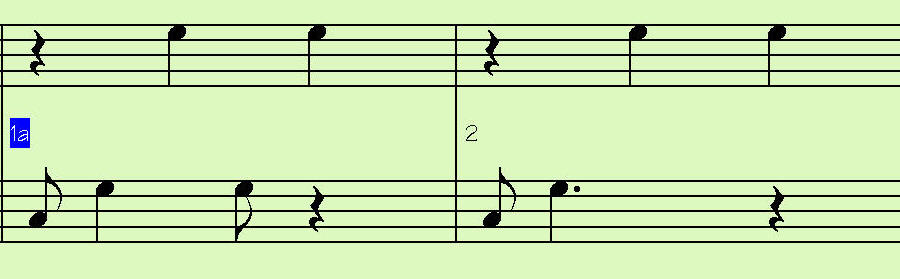
This section (left) shows a
pattern to be played on the guitar in the "New Waltz" style, which
works well with songs like Marty Robbins' "El Paso". The default key
for BIAB is C, so while in the music for this song the first chords
are written as "D", they appear in the patterns per the example at
left, which shows the C, E and G notes of the C major triad. The key
is the pattern, in which you (or with midi, the computer) play the
1st-5th-3rd-5th-3rd notes in the key as written. So in this song,
the sounds you hear are D, F# and A, the notes of the D major triad.
This two-measure pattern is one of
162 patterns of play spread out over five instruments to create the
complete arrangement for each of five instrument voices. This
pattern is the first played by the guitar in the A section of the
arrangement, highlighted in blue in the screenshot below. As shown
in that screenshot, BIAB styles map out into A and B sections, with
multiple subparts for each, including measures in various time
signatures.
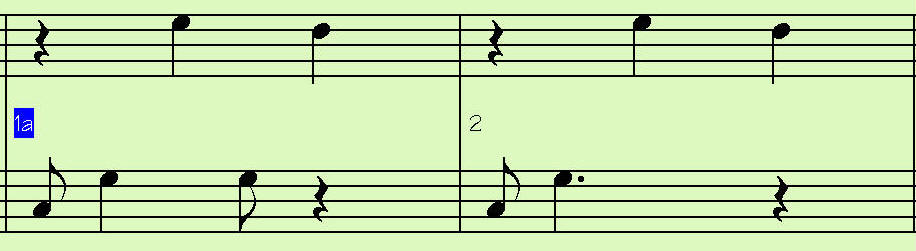
 This
next screenshot below shows the second two-measure guitar pattern of
the A section, which offers subtle variations on the theme
established with the first pattern. The quarter note on the third
beat of the first measure is played as a "D" rather than an "E" as
it is in the first pattern. In the second measure, the quarter note
on the third beat is also played as a "D". Or, more precisely, it is
played as flat thirds, or minor triads. This
next screenshot below shows the second two-measure guitar pattern of
the A section, which offers subtle variations on the theme
established with the first pattern. The quarter note on the third
beat of the first measure is played as a "D" rather than an "E" as
it is in the first pattern. In the second measure, the quarter note
on the third beat is also played as a "D". Or, more precisely, it is
played as flat thirds, or minor triads.
Professional musicians largely
recoil at such breakdowns of musical performance, calibrated to be
played by your "robot computer", their disparagements ranging from
the shortcomings of midi sounds (largely dependent upon the quality
of one's sound card) to the fact that they are not being produced
through the blood, sweat and tears of real people.
While I am largely in agreement
with those attitudes, I am also of the opinion that this BIAB
program, and others like it, should be a part of every public school
music program because they brilliantly deconstruct musical
composition into comprehensible bites. There is much to be
learned from this, which is my reason for guiding you through this
tutorial. Optimize your possibilities by using the available
options. Move your projects forward.
PROCESSING IDEAS:
While I wouldn't argue that the midi revolution has helped the
overall quality of sound - once you have attuned your ear to its
characteristics, you realize that you hear it everywhere in the
media, which must be deteriorating our sense of what pure acoustic
sound is - it is an extraordinary boon to compositional creativity.
It allows the average bloke, like myself, to create a demo version
of a tune in a short amount of time that is light years better than
could have been achieved a quarter century ago by a talented
multi-instrumentalist with a home 4-track recorder.
BIAB has limitations that are too
great for me to accept, but that doesn't mean it isn't valuable. I
sometimes use the software to capture a basic arrangement of a chord
progression, with something close to the feel I hope to achieve. As
clever as BIAB's style producers are, I can never quite fit their
work to the feel I want for my own compositions. If it is a country,
jazz or pop tune, I can usually come close enough that I can save a
version as a midi file that I will then import into Cakewalk's Sonar
Producer. Sonar allows me to edit all five tracks that are imported
from the basic BIAB arrangement, and usually with some minor tweaks
in the notation editor of Sonar I will get the song dialed in closer
to how I want it. I often just use the bass, drum and piano tracks,
saving the guitar work for myself to balance the midi
instrumentation with "real" strings.
Sometimes there just aren't any
short cuts one can take. I can't gain any benefit from BIAB with
pure rock feels, which I typically build from scratch using Sonar's
notation tools. Drums are always the hardest for me, as I am a
non-drummer, and I never seem to find "canned" beats (which Sonar
offers) that do what I want. I end up creating my own "loops", which
takes me right back to the BIAB model shown above, i.e., set
repetitions that add up to play the style of the song.
WORKING FAST:
My whole point in starting this piece was that I am focused on
efficient use of the little time I have available for any one of my
multiple projects. This little intro to BIAB and Sonar Producer's
midi notation capabilities is offered as one example of tools I use
to make the best use of my time, though some may argue that I might
find more valuable things to do.
Doubter voices aside, my focus
with music production is on developing instrument parts quickly, and
where the guitar parts are concerned, which I typically record
"live", I have endeavored to become adequate to the task of quickly
writing and recording a song at least well enough that I can stand
to hear it back. I never consider my guitar parts more than
"sketches". This may not seem a high standard to shoot for, but it
is like I said earlier, I do what I can with the time I have. The
toughest challenge for me is that I am usually recording my guitar
parts the one and only time I will ever play most of them. That
gives me kind of a rush, like a captured moment that one hopes is
inspired. It isn't always, but working that way keeps projects
moving forward.
I do the vocals the same way,
doing most in not more than a few takes. Sometimes I'll keep a
handful of full performances and then cut and snip the best parts
and put them together in Sonar, which is where I do all my
recording.
I usually don't put more than a
few hours in to any of the originals I produce as demos, and yet
they have gotten better over the years. Some weeks are tougher than
others, but on average and using the available technology I write
and record, to various degrees of completion, two or three new
originals each week, year around. And yet it can't account for more
than 10 percent of my waking hours.
I may not be great as an artist,
but I have done the one thing that I never believed was possible
back in my youth. I have learned, in large part, to master my own
time. The hub-bub of life does not own me anymore, which means my
spirit is still alive. And that remaining the case, anything remains
possible.
- RAR
|
From May 6,
2009
An Update: Plaudits for
Kaiser Home Care
The story that follows is
really hard on Kaiser Permanente, particularly their Emergency
Room staff and practices, and the "care givers" in the Kaiser
hospital. The depiction of the ER staff as uncaring and
unresponsive is completely accurate from our family's experience
with them, and feelings of bitter resentment will be slow to
dissipate. That said, the "home care" specialists who have
visited the Rice household repeatedly to provide post-surgical
care have been nothing less than spectacular. They have been
professional, thoughtful and extremely caring and if the entire
U.S. health care system operated as they do, we wouldn't be
writing articles about the U.S. health industry's lowly status,
37th among all nations according the World Health Organization.
Kaiser home care has been exceptionally good and the Rice
family wishes to thank them most sincerely.
- RAR
From April 24,
2009
The Sorry State of U.S.
Healthcare Personified
Oh Kaiser!
You Are Killing Us!
 In
Michael Moore's documentary on the U.S. healthcare system, Sicko
(click here to read
a review on RARWRITER.com), there is a section in which
President Richard M.
Nixon is captured on one of the notorious Nixon White House
tapes talking with his domestic advisor John Ehrlichman about how
impressed he is with Henry J. Kaiser, the steel baron and
founder of Kaiser Permanente, whom Nixon admires for finding
a way to turn provision of health care into a profit-making
enterprise. That audio clip itself is enough to make you sick, and
most certainly it is the personification of the film's title. In
Michael Moore's documentary on the U.S. healthcare system, Sicko
(click here to read
a review on RARWRITER.com), there is a section in which
President Richard M.
Nixon is captured on one of the notorious Nixon White House
tapes talking with his domestic advisor John Ehrlichman about how
impressed he is with Henry J. Kaiser, the steel baron and
founder of Kaiser Permanente, whom Nixon admires for finding
a way to turn provision of health care into a profit-making
enterprise. That audio clip itself is enough to make you sick, and
most certainly it is the personification of the film's title.
Kaiser Permanente came into
existence in 1952 as an extension of a health care model developed
for Kaiser shipyard and steel workers in the 1930s and '40s, and
which opened its enrollment to the public (non-Kaiser employees) in
1945. Today, Kaiser Permanente is, according to the company website, "a
working partnership of two organizations: the not-for-profit Kaiser
Foundation Health Plan and Hospitals, and the Permanente Medical
Groups."
Kaiser Permanente was the first of
the Health Maintenance Organizations (HMO). The Nixon administration
championed the HMO concept as a fix to rising health care costs and
the Health Maintenance Organization Act of 1973 created a special,
protected category of health services. The act established the HMO
as a mechanism within which subscribers paid fees (premiums) to gain
access to a network of doctors and hospital facilities. In return,
the HMO received mandated market access and federal development
funds (taxpayer money). The corporate welfare wasn't the only
advantage afforded to the crafty Kaiser. Under the 1974 ERISA Act,
Kaiser and his band of lawyers established a protection against
state common law tort lawsuits, putting in place a Federal law that
protected HMOs from malpractice litigation on the grounds that the
decisions regarding patient care are administrative rather
than medical in nature.
That is worth repeating for emphasis: Under
ERISA, HMOs like Kaiser Permanente were protected from malpractice
litigation because decisions regarding patient care were defined as
administrative rather than medical decisions. Here you
have the smoking gun that for the last 35 years has taken decisions
on your health out of the hands of your physician and put them in
the lap of bean counters and faceless corporate administrators. This
was the beginning of the end of quality health care in the United
States, accounting for why the U.S. is now viewed as having the 37th
best health care system in the world (according to the
World
Health Organization).
That's right, the "richest" nation
on the planet delivers poorer health care to its citizens than do
many eastern European, formerly Soviet-block underdeveloped nations.
The story below puts a face on
what this means for real people, in this case the Rice Family of
Benicia, California.
* * * * *
MANAGED CARE:
Two weeks ago, my wife became ill and for days she stayed in bed at
home, growing sicker and sicker. She felt poisoned. She couldn't go
to the bathroom, couldn't eat. Then she started to vomit.
We contacted Kaiser
to request an appointment with her doctor. That could not be
arranged the day we called, but we were told a Nurse Practitioner -
a strange locution - could see her, so an appointment was made for
that. Joanne's color drained from her usual Olive complexion to a
weird grey.
When we arrived for
the appointment, we got right in but my wife was seen for less than
5 minutes and was sent away suggesting that she double the dose
of over the counter stool softener that she was taking. Kaiser's
pre-printed instruction called for the commercial product Dulcolax,
which carries a warning label that the product not be used if the
patient is experiencing nausea or fever. She returned home to bed.
EMERGENCY:
On the following day, a Saturday, she began to run a fever and
experienced sharp stomach pains. We rushed to the Emergency Room at
Kaiser Vallejo (CA).
When we arrived,
there were a handful of people in the waiting room. Joanne
registered at the window, where a receptionist sat behind a thick
glass partition and spoke to us through a little vent, instructing
us to speak loudly so we could be heard. Security personnel were
stationed in the waiting room, where we were instructed to wait
until a physician could see her.
We sat there for 4
hours, during which time Joanne's condition grew worse. She doubled
in pain and began to cry.
We repeatedly went to
the protected reception area and pleaded for someone to see her, but
were instructed to wait.
Eventually her pain
became so great that I complained to the receptionist that we needed
immediate attention. Apparently uncomfortable at the pressure
we were putting on her, she disappeared from her station and
remained absent, even while we stood at the window, unwilling and
unable to simply sit any longer in the waiting room waiting for
medical attention. When she finally returned to her station, I told
her that it didn't feel to us like the ER staff was doing anything
to respond to what was obviously an emergency situation.
She asked if I would
like to speak with the
Assignment Nurse, who soon
enough came out to talk to us in the hallway. She told us there was
nothing they could do because there was no bed available. I told her
that we didn't need a bed, we needed a doctor! She replied
that they had to get a bed for patients before a doctor could
examine them. (Really? Doctors Without Borders examine people where
they find them in Africa: in a hut, outside, lying on the ground,
etc.)
I pleaded with the
Assignment Nurse, asking if Joanne could be put on a gurney in the
hallway - anything to get her seen by a doctor - but she said no.
I asked if we called
an ambulance - there were two of them parked not more than 50 feet
away from us, just outside the door to the ER - if we could be seen
immediately. There were people being carted in from arriving
ambulance units.
The Assignment Nurse
seemed to find this funny and again refused us service.
I asked, in all
sincerity, if she could tell us if there was some alternative to the
Kaiser ER where we could get immediate help for this situation that
was deteriorating rapidly and had been for more than 4 hours. I
asked "Is there anyplace else we can go to get help?"
"You can go wherever
you want," she replied with a smarmy, baited smile.
STUCK IN
PURGATORY: The
problem, of course, is that we can't go wherever we want, though
there are other hospitals in the area. Our health coverage, through
my wife's employment with the Benicia, California school district,
is with Kaiser. It is, in fact, one of the primary reasons she works
for the school district, outside of being in love with teaching. The
amount of money taken from her pay to cover the Kaiser monthly
premium takes all but $500 a month from her paycheck. (In the U.S.,
we don't value teachers much either.) Like many Americans, she works
for almost no pay, just coverage.
And the Kaiser ER
wouldn't provide service for the money we pay.
I reminded the
smarmy Assignment Nurse
- and I'll try to get her name for the benefit of us all, so she can
be watched - that we were asking to receive services for
which we pay dearly and routinely. This was not charity or a favor
we were asking. We were needing the health care we had purchased
with hard work. It didn't mean a thing to her.
"What if she dies in
your waiting room?" I asked.
The Assignment Nurse
just smiled, as if it was offered as a funny aside.
We refused to return
to the waiting room, as instructed. We just stayed at the little
window, staring in at the staff. People came and went and we waited,
my wife crying, looking terrible and doubled over in pain.
It seemed we finally
pressured our way in. They allowed Joanne to lay on a gurney in the
hallway and I sat on a chair next to her, waiting for someone to
help.
Suddenly the doors of
the ER burst open and a woman, who apparently had experience with
this ER, pushed a man in a wheel chair to another empty gurney next
to us, and helped him up on the contraption. He was moaning loudly
and doubled in pain. This woman, who was a civilian, maybe a wife,
and certainly not a Kaiser employee, had apparently driven into the
emergency, commandeered a wheel chair near the entrance, and simply
blasted her way in without waiting for the rigmarole we experienced
at the reception window. The nursing staff looked at them warily.
The Assignment Nurse
was in the area, joking with co-workers. Eventually someone went to
the man and checked his vital signs.
Some other hospital
worker told us that we would be taken into a room as soon as it was
readied. More than 4 hours into this nightmare, Joanne was wheeled
away to someplace I wasn't allowed to follow.
FACE OF DEATH:
Tests immediately revealed that Joanne had a blockage in her colon,
an emergency situation that required "immediate surgery" - another
14 hours later. She was prepped and went into the surgical suite
around 2 p.m. on Sunday, now 24 hours after we had arrived at the
ER. She was in surgery for 6 hours as they removed a section of her
colon that was badly distended. Just after 8 p.m. that night the
surgeon spoke with me as I sat in the surgery waiting room, the only
person there.
He told me that at
the point her colon was blocked, the tissues were swelled to many
times their natural size and he could see that the tissues had
already started to rip open. She was experiencing an intestinal
infarction (intestinal necrosis), a life threatening situation in
which Peritonitis is a common outfall. She was not more than hours
or possibly even minutes, from sepsis, a spread of infection to the
blood stream.
* * * * *
PREVENTIVE CARE:
Kaiser Permanente is big on preventive health care. Live Well and
Thrive is the message that is broadcast constantly in television
and radio ads in California as they spend huge money on advertising
budgets to try to lure potential victims...I mean, patients...away
from the rival Blue Cross/Blue Shield and other HMO providers.
Several months ago,
our Kaiser general practitioner insisted that Joanne have a
colonoscopy, advising that it was something that people over 50
years of age should have done to head off problems in the bowels
before they develop. The procedure had not gone well. The doctor who
performed the procedure was unable to complete the colonoscopy
because he believed Joanne had a "twisted colon". They tried
repeatedly, though Joanne experienced great pain and discomfort, to
perform this procedure that has been promoted by the likes of CBS
anchor woman Katie Couric, who had one done on herself for the
benefit of television viewers. (Couric's husband died of colon
cancer and she was on a crusade to promote the "life-saving"
procedure.)
Most people do fine
with a colonoscopy, but not Joanne (or, as it turns out, her
brother, who also had the procedure and found it excruciatingly
painful). Joanne was in bed sick for days following the colonoscopy,
then for additional days as Kaiser doctors tried other less invasive
means of examining her colon. They came away with nothing, but
Joanne lost a week of work.
The surgeon who
removed part of her colon in the emergency operation determined that
the colonoscopy had aggravated a condition of diverticulitis.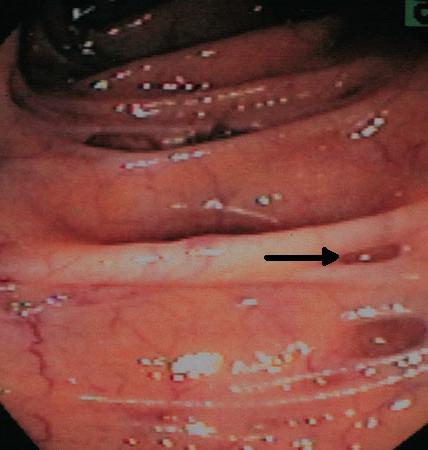
diverticulitis:
A common digestive disease particularly found in the colon (the
large intestine). Diverticulitis develops from diverticulosis,
which involves the formation of pouches (diverticula) on the
outside of the colon. Diverticulitis results if one of these
diverticula becomes inflamed or infected. The colon can become
infected with craters of food stuck inside, which causes
abdominal pain. In complicated diverticulitis, bacteria may
subsequently infect the outside of the colon if an inflamed
diverticulum bursts open. If the infection spreads to the lining
of the abdominal cavity, (peritoneum), this can cause a
potentially fatal peritonitis. Sometimes inflamed diverticula
can cause narrowing of the bowel, leading to an obstruction.
Also, the affected part of the colon could adhere to the bladder
or other organ in the pelvic cavity, causing a fistula, or
abnormal connection between an organ and adjacent structure or
organ.
THRIVE MY ASS:
As I write this, Joanne is in a "step-down unit" - halfway between
an Intensive Care and a regular hospital unit - which she was moved
to after spending a day in a regular hospital room. Supposedly she
would get more attentive care in the step-down, where there are more
nurses. At least that's what we were told, but I have seen no
indication that they do anything more for her there than they did in
the previous post-operative unit. The proximity of the nursing
station to her room is much nearer than in a normal hospital unit,
but that only seems to mean that the racket is louder and the nurses
don't have to walk as far.
I have been caring for Joanne
through the night. The nursing staff has provided two foot stools
that I line up with a chair so I can lay down from time to time.
Occasionally someone will come in and take her blood, usually
flipping on the light in the room around 4 a.m.. Sometimes a nurse
shows up to change an I-V bag or empty a bed pan, but it feels like
most of the nursing is being done by me. I reposition her in the
bed, help her go to the bathroom using a portable commode, refit the
cuffs that keep the blood circulating in her legs, and fetch ice
chips, which is all she can have. I empty bed pans myself when the
staff isn't around, and there don't seem to be enough of them to pay
much attention to the patients filling every room.
I haven't seen the surgeon since
just after the surgery, though I leave messages for him to call.
Joanne's recovery is painful and
slow. It may be par for such a difficult surgery - or "complicated"
as the surgeon called it - but not being a medical practitioner
myself, I don't know what to expect. No one tells us anything. As
long as I am in the room, the Kaiser nursing staff seems happy to
let me do the work. I am afraid to leave because I lack confidence
that they would respond to her needs.
She has been largely incoherent
since coming out of surgery, hallucinating and talking to dead
relatives. One nurse asked me if she was always this way. No, not
normally, I assure them.
I wish someone would assure us.
I am exhausted, as is my wife. She
has been able to take liquids, including broth. She asked for milk
yesterday. What they brought had gone bad and had to be thrown out,
and no replacement was provided.
We don't know when this will end,
but the expectation is a follow-up surgery in two months.
I have lost a full week of work
without pay. We wonder what part of this medical expense will be
picked up by our Kaiser coverage, and what humongous bill we will be
left to pay out of pocket. We know that most people in the U.S. who
go bankrupt do so because of overwhelming medical expenses. Such
prospects don't help the healing process.
SICK OF US:
Joanne was moved to a room one floor up, where she will receive a
lower level of attention from nurses, were such possible. The nurse
who processed her in to her new room noticed that her dressing had
never been changed. It was filthy because her colostomy bag had not
been emptied and had broken open.
I finally got a call from our
primary doctor, who had been unaware of any of what was going on.
Her response, as she read through her chart as we talked on the
phone: "This sounds like a nightmare."
FINAL WORD:
In this country, we citizens seem split on whether health care
should be guaranteed universally, as it is in every other
industrialized nation but ours, or whether it should be left to free
market enterprise, as Henry Kaiser envisioned it. It is really only
"Republicans" who look at it that way.
I am angry and sad. People argue
that "socialized" medicine, like that in Canada and Britain, is a
terrible thing because people have to wait for delivery of health
care services. I personally know European natives who live and work
in the United States but return to their home countries once a year
to receive medical treatment, covered under their home countries'
universal health care systems. None of them say anything about long
waits for treatments and procedures.
Fair warning: the next
person who, in my presence, says that they don't want the government
running the health care system in the U.S. is going to experience
such a beating... It will be interesting to see how well their
health care system cares for their suffering.
Our "health care provider", Kaiser
Permanente, doesn't seem to give a damn about ours.
- RAR
Note on the Images in this
article: From top -
Kaiser Permanente logo,
"Give to Kaiser" website,
"Gold
Is Money" website image, diverticulitis photo. The Internet
is filled with hate for Kaiser Permanente. Some, see the "Gold
Is Money" website, find Satanic images in Kaiser logos.
______________________________________________
From March 6,
2009
From the Annals
of Home Ownership in a Small Town:
Design-Build with Dufus and Gomer
That
photograph above captures part of the rustic appeal of the street on
which my family lives in Benicia, California. In the old part of
town, six blocks east of First Street, near the historic military
warehouse district that is now the arts community, and near the pier
where the new Saturns get driven on to outbound ships, our
neighborhood lacks all the accoutrement of a modern development. We
have sidewalks that lack the will to make the entire length of our
block. We have a mixture of housing types, nice but small for the
most part, because this is California where square footage remains
dear: $210-$240 per in our neighborhood, depending upon
the builder and the complexity of the project. We have a palm tree
in our front yard with palms growing straight up, like a weed
topping a humongous totem, cut weird to prevent the showers of
electrical sparks that occur when the fronds are allowed to grow
into the passing power lines. We have huge eucalyptus trees that are
roosts to red-headed turkey vultures, and just a block to the north we have a trailer
park where some of our best friends live. We have a neighbor with a
wonderful chocolate lab named Boomer, and now a new puppy who is the
mirror-image of Boomer, who plays merrily with anyone
who will have him. His master blares blues music, when he's home, so
the neighborhood has a "feel". But it's not blue at all. Are
you kidding me? It's the best damned street in America, because it's
our street!
When I say "our" street, I'm
talking about "our" as meaning more than just my immediate family. This is a
neighborhood and the street that is "ours" is also our neighbors'.
It's not that we know all of our neighbors, though we know the ones
near at hand, and they are all friendly folks who don't do a thing
to get in anybody's business or personal way. Benicia is a small
town that often puts me to mind of the setting of "To Kill A
Mockingbird." We are out on the edge, not too far from Boo Radley's
Mom's place, but it's all good.
But wait...
For the last many weeks we have had
a new presence in the neighborhood. That is his portable potty, his
sign (he paints far better than the smudges would indicate, but I
wanted to give him the courtesy he would never give to us), and his trucks shown in the picture above. It is only some of
the equipment he has on site.
He is a contractor by the name of
Dufus Jones, and the proprietor of Dufus Construction (names changed
to protect the guilty). He is a
well-established Benicia builder who has a daughter who goes to
school with mine, and she is by all reports a great kid, the product
of strict parenting. My daughter has spent the night at the Dufus'
home, and she speaks well of Dufus who helped her get down games so
she and her friend could play. "He's really nice," she tells me, but
then she says that about everybody.
My knowledge of Dufus and his
construction outfit is that he is known for his ability to transform
any dwelling into something resembling a Century 21 office. Don't be
confused, this is residential construction, so his reputation
as a "Design-Build" guy is narrowly defined. I don't happen to like
Century 21 offices, for the most part, but I must say that Dufus is
doing a nice job on the ramshackle property next door to our house.
He replaced all the windows, the roof including rafters rotten with
dry rot, the stucco exterior (which he painted the same color as our
house), and he gutted and is redoing the
entire interior. He built a large covered front porch, which seems
almost a fourth the size of the entire house, which is small.
This aspect of having the portable
potty parked on the street for the last 10 weeks has been well worth
the discomfiting eyesore. Dufus is taking a "tear down" and turning it into a
pleasant little property, or so was the thinking of us and our
neighbors. Dufus is improving property values for us all.
Then, one day several weeks ago, the
worm began to turn...
My wife, who is about as
helplessly controlled by her innate curiosity as a domestic cat, but
who is as controlling and territorial as a tiger in the wild, decided to
ask the guy working next door just what was going on there. Was it
being fixed to sell? Was it going to be a rental?
"I hope my boss is going to give
it to me," the man told her. To which she replied, "Wow, you must
have a nice boss!"
With that introduction, she took
the next opportunity to meet the man himself, Dufus Jones.
There is something fishy about a
guy who comes into a deeply routed neighborhood and plants his potty
and starts tearing things down using little front loaders and power
tools, but who never says boo to his new neighbors. That's just not
the way its done in polite society. "Professionals" introduce themselves to the adjacent
land owners and talk about what they hope to do with the property,
and they take the appropriate steps to service the concerns of
affected parties. They put up "site poles" to clearly indicate the
height of what they intend to build, in case it interferes with any
of the neighbors' view lines. None of this was happening next
door. Under certain circumstances, the City Planning office should
insist on such mechanics, but they may not be required in this case.
We just don't know and no one is telling the neighbors anything.
My wife, who is pretty good at
coaxing conversation, introduced herself to Dufus Jones and started
making small talk, leading to questions about what he is building.
"We are doing a facelift to the house," he said, and talked a bit
about that. When she offered that she was always interested in
knowing what was going on in the neighborhood, Dufus for some reason
volunteered that he had experienced rough going with some previous
neighbors. "I had one lady tell me that I was just a mean-spirited
person," he told the wife, which struck her as an odd boast,
almost threatening. Then Dufus
mentioned the garage he was building out back.
Interesting that a guy would build
a garage on a house that already has one. "How big?" the wife asked.
"It will be 30' by 30' and 15' feet tall." Otherwise, a building at
least as big as the house he is renovating. "And what are you going
to put in there?" she asked. "A boat and a couple motorcycles,"
Dufus
said.
Mrs. RAR, it should be said, is
not stupid. Besides, it hardly took advanced intelligence to
deduce that one could put a boat and two motorcycles in the
existing garage.
Dufus picked up on her skepticism
and, by her account, flared at her. "I'll put whatever the fuck I want to put in
there!" he reportedly snapped. She read this as innate disdain for "questioning
women".
Oh-oh. Boy, did he mess with the
wrong person. I know, I've been messing with this "wrong person"
for years.
She immediately called the Benicia
City Planning Office to inquire about Dufus Jones and what he was
building. In fact, he had requested and received permits to
renovate the house and to build a garage on the property. He was
granted the permits in December and had started demolition within
days of receipt. "Oh, Dufus will probably move in there for a couple of years,"
said the planning office guy. "He does that." It seemed like
our planning official, whom we will call Gomer, knew Dufus. The
Planning official's response, when my
wife voiced concern that Dufus was misrepresenting his intentions for
the property was, "Well, one day if you want a permit to build I'll
give you one."
It didn't take long to get a
picture of what Dufus was up to. He had a dump truck, filled with the
rubble from the demolition of the house, that had been parked out on
the street in front of the construction site for weeks. It scared our kids to get into our
car, parked behind it along the curb, because there were thin sheets
of metal that flapped in the wind and threatened to fly off the pile
like whirling heli-blades. Dufus obviously had no place to park this
truck, any more than he had a place to park the mini-front loader
sitting in the front yard, or the large box truck in the driveway, or any other of
his vehicles. Dufus is clearly setting up to run Dufus Construction out of the 900 square foot building, complete with
running water, that he is building off our alley. He even had the
audacity to tell my wife he wanted to widen the alley - as if this
city property were his - so he could "get my trucks in there."
A quick check of the City of Benicia
zoning map showed that Dufus is planning to do this on property zoned for
residential use, not commercial. One might think the duped City
Planners would want to know about this!
On a Friday, I fired off emails to
the City offices and got a nice lady from Community Development that
confirmed that Dufus could not legally pull this stunt, however willing
the permitting office to allow Dufus' deceptions. She instructed that
Dufus was allowed to park one vehicle in that 900 square foot garage, and that if he
did more, and certainly if he used the building to run his business,
that he would be out of compliance with city ordinances. As for the
dump truck parked on the street, she set up a call for the truck to
begin being ticketed on a daily basis starting on Monday. On
Saturday, the truck disappeared. Was this just coincidence? Had
Dufus just finally gotten around to getting rid of the rubble? Or
had he been tipped off by someone in the city that tickets and fines
were being prepared? I found the Dufus Construction truck by accident on
that following Monday,
parked in a vacant lot next to my son's karate dojo. The truck was still filled
with the "dangerous" rubble. That rubble has finally been disposed of,
but the dump truck is still sitting on that vacant lot, no doubt
until the day it can be moved in doors over by our house. (I drove
by the lot this week and saw a disgruntled looking fellow staring at
Dufus' dump truck while talking in an agitated way on a cell phone,
no doubt lodging a complaint to the City. The words Dufus
Construction, along with a phone number, are prominently displayed
on the doors of the heap. )
Benicia is a small town of only
28,000, and the old town community we live in comprises only a fourth of
that population. It is the more "intimate" Benicia, different by
nature from the bedroom community of commuters who live on the north
side of I-780. People in "old Benicia" talk, and a torrent of stories have
poured forth about Dufus and
his operation. "He's part of the good old boys network with the City
Planning office," one business associate told my wife. "My husband
and I had a terrible time with him at another place we lived. We
documented the whole thing. We had photographs, even video, of Dufus
and the good old boys from the City drinking beers after work on the
lawn next to our house. It didn't do us any good at all. He got away
with whatever he wanted."
* * *
In a very real
way, this story is representative of so many of the basic ills of
our community life. It seems that at the root of every turmoil we
experience is some Dufus who is determined to act in a self-interested
way, reinforced by a corrupt system of public administration. That's
the micro view of what has happened to the U.S. financial system, which
was fraught with self-indulgent bullies screened by regulators who
for some reason looked the other way. Dufus Construction and
the City of Benicia Planning Department bring it down to a
neighborhood level, where the biggest assets people hold are their
homes. It is a quality of life issue on that plane. You would like
to think that people would behave respectfully "in your home", but some don't.
Some are Dufus's.
That house next door
has vexed me since I spoke with our former neighbor last year and
learned that he was having to sell his home, which he couldn't
afford to maintain, to cover medical expenses left by his recently
deceased mother. He
and his sister - senior adult children - had lived there with her
until she died, inheriting $60,000 in medical bills that insurance wouldn't
pay.
But there it is. We
can't commit to be careful with others. We allow people and property
to be ruined, or debased, because there are Dufus's who will sweep in
like those vultures who haunt the tall eucalyptus across the way, to
take advantage. And our systems, riddled with the kind of good old
boys that gave us "Brownie" and the systemic breakdowns along the
Gulf Coast following Hurricane Katrina, don't really do to protect
our communities what we
would like to trust that they would. That's not a new development in
this country, just one that eventually works against us all.-
RAR
"It's the poor that get the
blame..."
The Renewed Spirit of "Meanness"
It's the same the whole world
over,
It's the poor that get the blame,
It's the rich that get the pleasure,
Ain't it all a bloody shame.
The words of that old pub favorite
kept coming back to me all week.
There is a rising sense of
ill-feeling in the U.S. coming from those of us - myself not
included - who are miffed at having to ante up taxpayer funds to
bail-out new homeowners who took advantage of the liberal mortgage
lending policies of this decade to buy houses that they would never
be eligible to gain financing for in any other time or environment.
The pitch went like this: we will
loan you money based on your stated income, no tax returns or
financial statement required as long as you have a job and are
reasonably honest in your claims of income. We will set you up with
an interest-only, Adjustable Rate Mortgage (ARM). You will have five
years to refinance into a regular fixed-rate mortgage, and you can
begin that process at any time. This first ARM you are getting gets
you into the game. You won't be paying on the principle of your loan
under this interest-only arrangement, but even with a fixed-rate
mortgage you wouldn't be paying on anything but the interest in the
first five years anyway. Lenders always take their cut off the top.
To a population that has seen
wages stagnate for better than three decades now, and who had begun
to doubt that their "American Dream" - symbolized by home ownership
- would ever come true, the offer was way too good to pass up.
Especially in California, where the vast majority of working people
make nowhere near enough money to buy a home at the inflated values
the state saw for the past 25 years, the prospect of getting a piece
of the pie was too good to pass up. Especially in California, where
the class system is partitioned around who owns and who just rents.
And especially in California, where everyone knew people for whom
the purchase of real estate had been a huge financial boon. It just
didn't make any sense to rent if there was any way you could "get in
the game".
The aggressive lenders at Bank of
America and Washington Mutual and other "local" institutions got
into bidding wars with online brokers like Countryside to write ARMs
that they then packaged and sold off to other financial institutions
as mortgage-backed securities.
It all rolled along pretty well,
like a Ponzi Scheme, until the ARMs started coming due and people
found they couldn't refinance, as promised. And they couldn't afford
the ballooning payments, so home foreclosures skyrocketed, dragging
property values down all across the board, devaluing portfolios and
rendering mortgage-backed securities as debits, weighing down bank
balance sheets. That caused contraction in the lending markets,
including the overnight swaps that keep the whole rickety banking
system upright, and the dominoes began to fall.
Probably no statistic points out
the frailty of the now defunct housing boom more tellingly than the
fact that something like 85 percent of the people who are
forfeiting on their mortgage loans never contact their lender to
tell them they are having a problem and to ask for help. Why?
Because they were scared and ashamed and probably completely
uneducated to the process of dealing with such financial
arrangements. They were first-time home buyers, inexperienced at
dealing with banks. Some were speculators who were rolling the dice
on flipping a property before it ate them alive, and those people
who never intended to live in the homes they bought had little
stomach for arguing their piracies to lenders. They just walked on
the whole mess and took the loss.
A certain segment of our
population - usually the people who are generally opposed to
government entitlement programs - are sounding off about how the
people who bought homes they couldn't afford are largely responsible
for the mortgage crisis. The meanness of people who have had the
good fortune to turn their hard work into honest money with which
they made sound investments is understandable, but dispiriting.
We have reasonable people talking
about the benefits of stable communities, arguing that helping those
marginal buyers maintain their homes is a far better investment for
everyone in the long run than is having houses lost to foreclosure
and becoming vacant magnets for societies ills, as they tend to do,
dragging down property values for everyone in the area.
Mean is mean though, and it never
makes sense. - RAR
_________________________________________________
|
Essay Archives
Earlier RAR essays have been archived on a separate page.
See the Table of Contents below.
Click here to go to the Essay Archives
Previous
Entries
GO TO:
ARTIST NEWS
•
YOU
ARE ON AN ESSAYS PAGE AT
RARWRITER.COM
|
|
 RARWRITER PUBLISHING GROUP PRESENTS